

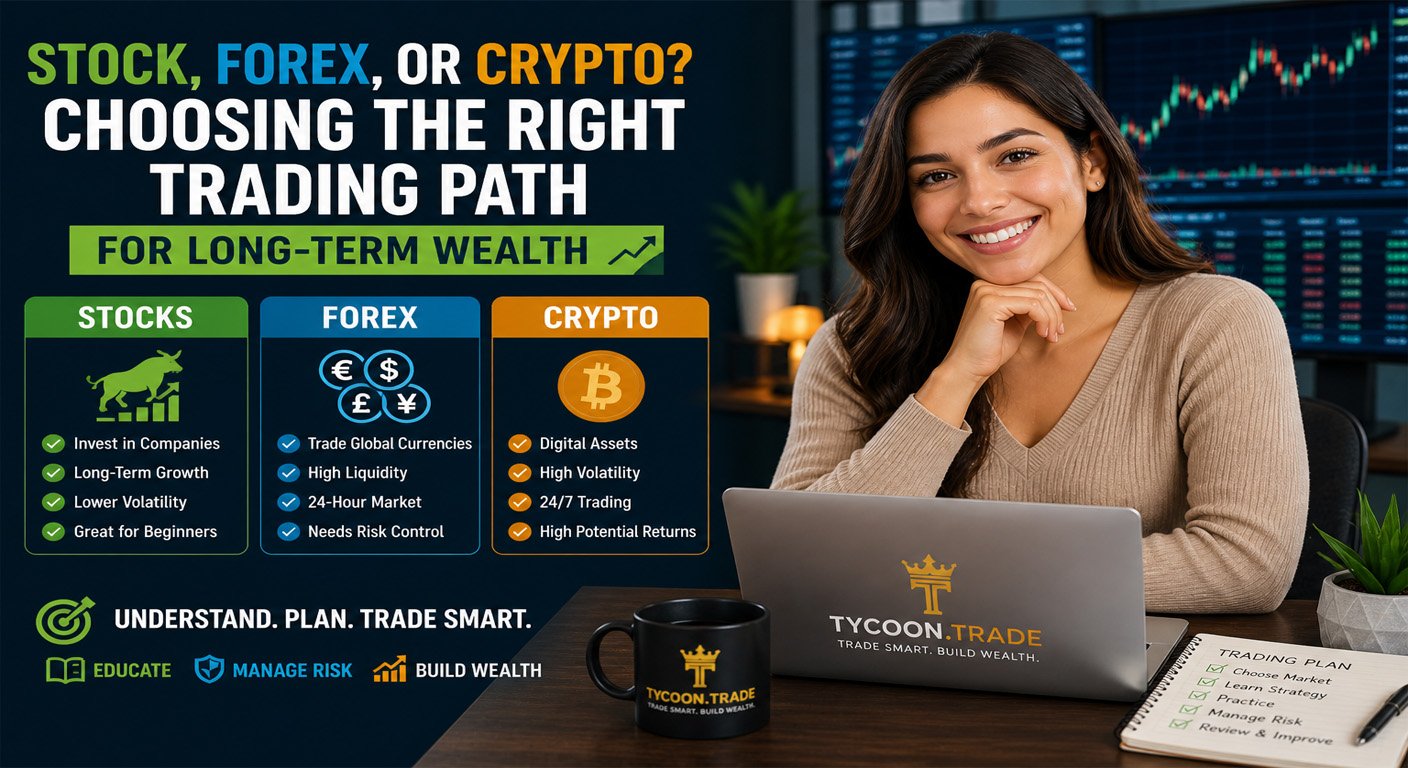
When beginners enter the world of online trading, one of the first questions they ask is: Should I trade stocks, forex, or crypto? Each market has its own opportunities, risks, learning curve, and personality. Choosing the right trading path can help you avoid confusion and build a smarter long-term plan.
Tycoon.Trade encourages new traders to think carefully before jumping into any market. The goal is not to chase the fastest profit. The goal is to choose a market you understand, manage risk properly, and build disciplined trading habits over time.
Why Choosing the Right Market Matters
Not all markets behave the same way. Stocks are tied to companies. Forex is tied to currencies and global economics. Crypto is tied to digital assets, technology trends, regulation, and investor sentiment.
The right market for you depends on your goals, available time, risk tolerance, capital, and education level. A beginner who chooses the wrong market may feel overwhelmed, trade emotionally, or take unnecessary risks.
Stock Trading: A Popular Starting Point
Stock trading involves buying and selling shares of public companies. Many beginners start with stocks because companies are easier to research and understand. You can study earnings, products, leadership, industry trends, and long-term business performance.
Advantages of Stock Trading
- Easy to understand for beginners
- Many educational resources available
- Access to well-known companies
- Suitable for both short-term trading and long-term investing
- Can include dividend-paying stocks
Challenges of Stock Trading
- Markets can drop quickly during bad news
- Individual companies can fail
- Beginners may chase popular stocks too late
- Day traders may face account rules and margin requirements
Stock trading may be a good fit for beginners who enjoy researching companies and want a market with strong educational support.
Forex Trading: The Global Currency Market
Forex trading involves buying and selling currency pairs such as EUR/USD, GBP/USD, or USD/JPY. The forex market is large, fast-moving, and heavily influenced by interest rates, central banks, inflation, employment data, and global events.
Advantages of Forex Trading
- Large global market
- Active trading opportunities
- Markets open during extended global hours
- Many technical trading strategies available
Challenges of Forex Trading
- Leverage can increase losses quickly
- Currency markets can be complex
- Economic news can cause sharp price moves
- Not always beginner-friendly without training
Forex trading may appeal to traders who enjoy global economics, technical charts, and fast-moving markets. However, beginners should be very cautious with leverage.
Crypto Trading: High Volatility and Digital Assets
Crypto trading involves digital assets such as Bitcoin, Ethereum, and other cryptocurrencies. Crypto markets are known for high volatility, strong trends, sudden reversals, and rapid news-driven price movement.
Advantages of Crypto Trading
- Accessible to beginners
- Markets operate around the clock
- High volatility can create trading opportunities
- Strong interest in blockchain and digital finance
- Many platforms offer small starting amounts
Challenges of Crypto Trading
- Extreme price swings
- Regulatory uncertainty
- Security risks and scams
- Emotional hype cycles
- Beginners may buy during market excitement
Crypto trading may fit people who are interested in digital assets and can handle volatility. However, beginners should never risk money they cannot afford to lose.
Stock vs. Forex vs. Crypto: Quick Comparison
| Market | Best For | Main Risk | Beginner Difficulty |
|---|---|---|---|
| Stocks | Company research and long-term growth | Company and market risk | Moderate |
| Forex | Currency and global economic trading | Leverage and fast price moves | Moderate to difficult |
| Crypto | Digital asset speculation and volatility | Extreme volatility and security risk | Moderate to difficult |
How to Choose the Right Trading Path
Before choosing between stocks, forex, or crypto, ask yourself these questions:
- Which market do I understand best?
- How much time can I spend learning?
- How much risk can I realistically tolerate?
- Do I prefer long-term investing or active trading?
- Am I prepared to track trades and review mistakes?
- Do I understand the fees, spreads, and tax issues?
Risk Management Is More Important Than Market Choice
The market you choose matters, but risk management matters more. A good trader can lose money in any market without discipline. A careful trader can improve over time by protecting capital and learning from mistakes.
Important risk habits include:
- Start small while learning
- Use a written trading plan
- Avoid excessive leverage
- Set maximum loss limits
- Keep a trading journal
- Never trade money needed for bills or emergencies
How Tycoon.Trade Can Help
Tycoon.Trade can help beginners compare trading paths and make smarter decisions before risking money. A strong trading education site should explain the pros, cons, risks, and strategies behind each market.
Helpful Tycoon.Trade resources could include:
- Stock trading beginner guides
- Forex risk management tutorials
- Crypto trading safety checklists
- Trading platform reviews
- Market comparison articles
- Trading psychology lessons
- Long-term wealth-building guides
Final Thoughts
There is no single “best” trading market for everyone. Stocks, forex, and crypto each offer different opportunities and risks. The smartest choice is the market you are willing to study carefully, practice responsibly, and approach with discipline.
If you are a beginner, focus less on fast profits and more on building a strong foundation. Education, patience, strategy, and risk control are the real keys to long-term wealth-building.
Disclaimer: This article is for educational purposes only and is not financial, investment, tax, or legal advice. Trading stocks, forex, crypto, options, or other financial products involves risk, including possible loss of principal. Always do your own research and consult a qualified financial professional before making trading or investment decisions.
Tycoon Related Articles